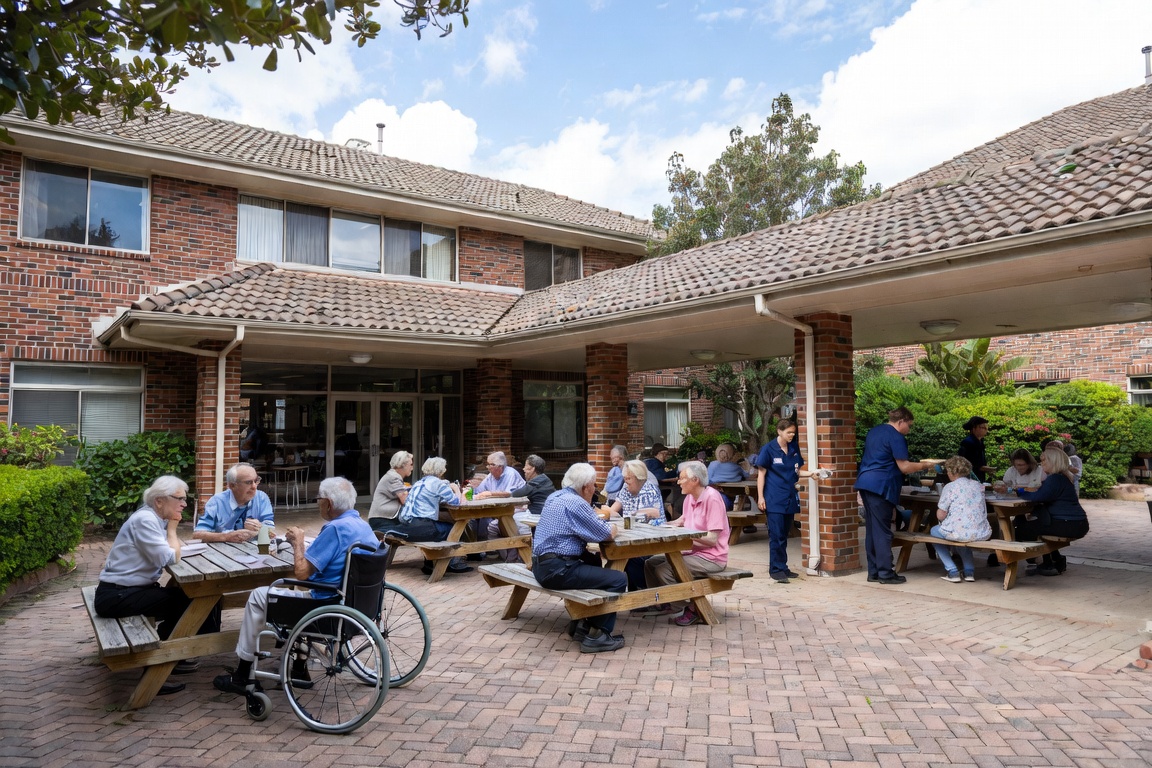
Earlier this year, HumanGood CEO John Cochrane said something that caught the attention of the entire senior living industry. Speaking to Senior Housing News, he put it plainly: the industry must either accelerate, innovate, and lead — or drift into irrelevance. His exact words were even more direct. Step up or get stepped on.
That kind of language is not common in senior living. This is an industry that tends to move carefully, with long planning cycles and conservative decision-making. But Cochrane's message reflects a growing consensus among industry leaders that the window for gradual change has closed. The next two to three years will determine which operators lead the next era of senior living and which ones fall behind permanently.
This article breaks down what is happening, why the timeline is so compressed, and what it means for both the operators who run these communities and the families who are choosing between them.
The Demand Wave Is No Longer Theoretical
For years, the senior living industry talked about the silver tsunami as something on the horizon. A demographic event that was coming but had not arrived yet.
In 2026, it has arrived.
The oldest baby boomers turned 80 this year. The 80-and-over population in the United States is projected to grow by more than 4 million people by 2030. The number of adults 75 and older living alone is expected to more than double by 2040, which means fewer family caregivers and more people who will need community-based support.
At the same time, new construction has slowed to its lowest level since 2006. Average construction cycles have stretched to 29 months, meaning projects that break ground today will not open until 2028 at the earliest. The industry would need to build at nearly double its historical maximum pace just to maintain current occupancy levels through 2030.
The math is simple. Demand is accelerating and supply is not keeping up. National occupancy is approaching 90 percent and could reach 93 percent by 2028.
For operators, this sounds like good news. Full buildings mean strong revenue. But the reality is more complicated than that.
Full Buildings Do Not Mean the Job Is Done
High occupancy can mask serious underlying problems. A building that is 90 percent full but running on outdated systems, understaffed shifts, and disconnected technology is not a thriving community. It is a community that is surviving on demographic tailwinds and will struggle the moment conditions shift.
The operators who are actually winning right now are not just filling beds. They are investing in the infrastructure that allows them to deliver a consistent, high-quality experience at scale. That means technology that connects their operations. Staffing models that reduce burnout and turnover. Dining programs that meet the expectations of a generation that will not tolerate institutional food. Wellness initiatives that go beyond basic care and focus on helping residents live better.
The communities that treat high occupancy as permission to coast are the ones that will lose ground when the next wave of competition arrives — whether from new construction, active adult alternatives, or tech-enabled home care models that give families another option entirely.
What Families Are Starting to Notice
This matters to families as much as it matters to operators.
When a family begins researching senior living communities for a parent, they are looking at everything. Reviews. Response times. The quality of the tour. How quickly someone follows up after an inquiry. Whether the staff seems engaged or overwhelmed. Whether the dining room feels like a restaurant or a cafeteria.
These details are not random. They are direct reflections of how well a community's operations are running behind the scenes.
A community with integrated technology can respond to an inquiry within minutes because the lead is tracked automatically. A community without it might take days to follow up because the inquiry was written on a piece of paper that got buried under a stack of forms.
A community with modern workforce tools has stable, well-supported staff who know the residents by name. A community without them has constant turnover, which means new faces every month and a resident experience that feels inconsistent.
Families may not understand the operational details. But they feel the difference. And they make their choice based on that feeling.
The Three Things That Separate Leaders From Everyone Else
Across the industry, the operators who are pulling ahead share three characteristics.
The first is operational discipline. These operators have moved beyond managing by instinct and are using data to drive every major decision. Pricing, staffing levels, vendor relationships, maintenance schedules, dining satisfaction. They are measuring what matters and acting on what they find. They treat operational efficiency not as a cost-cutting exercise but as a quality-of-experience initiative.
The second is technology integration. The leading operators are not just buying software. They are connecting their systems so that every department has visibility into what is happening across the community. When dining data talks to workforce data, and workforce data talks to census data, the entire operation runs smoother. Decisions get made faster. Problems get caught earlier. Staff spend less time on administrative tasks and more time with residents.
The third is workforce strategy. The best operators have recognized that workforce is not an HR function. It is a strategic priority. They are investing in recruitment, training, professional development, scheduling tools, and staff wellness programs. They understand that a caregiver who feels supported and equipped will stay longer and perform better. And they know that in a labor market this tight, the communities that treat their staff well will attract the best talent.
Why the Next Two Years Matter More Than the Last Twenty
The senior living industry has always evolved slowly. Change has been incremental, measured in decades rather than years.
That timeline no longer works.
Several forces are converging simultaneously. The baby boomer generation is entering senior living with expectations shaped by decades of consumer choice. Medicaid funding is facing its most significant cuts in the program's history, with $911 billion in reductions over the next decade that will put pressure on state budgets and provider reimbursements. Construction costs remain elevated, limiting new supply. The labor market is still historically tight. And technology-enabled alternatives like home care platforms and active adult communities are giving families more options than ever before.
Operators who wait for these pressures to resolve on their own will find themselves competing for residents, staff, and capital from a position of weakness. The ones who act now — modernizing their operations, investing in their teams, and building technology infrastructure that scales — will be the ones who define the next chapter of senior living.
As NIC MAP CEO Arick Morton put it, the need for senior living services is of ever-increasing importance, and there is a unique opportunity to step up and meet the challenge of the aging boom. For those who can master the development and operational equation, incredible opportunity awaits.
What This Means If You Are an Operator
If you run a senior living community, the question is not whether you need to modernize. The question is whether you are doing it fast enough.
Start with an honest assessment. How many disconnected systems does your team use every day? How long does it take to respond to a family inquiry? Can your leadership team see real-time data on occupancy, staffing, dining satisfaction, and financial performance from one place? If the answer to any of these is "I'm not sure," that is the first problem to solve.
Technology is not the only answer. But it is the foundation that everything else is built on. When your systems work together, your staff has more time for residents, your families feel more informed, and your leadership has the visibility to make better decisions.
The communities that figure this out in the next 24 months will have a significant competitive advantage. The ones that do not will be playing catch-up in a market that does not reward hesitation.
What This Means If You Are a Family
If you are researching senior living for a parent or loved one, pay attention to how the community operates, not just how it looks.
Ask how they handle after-hours inquiries. Ask how their staff communicates across departments. Ask if their dining team knows about residents' dietary preferences. Ask how they manage scheduling and what happens when a caregiver calls out sick.
These questions reveal whether a community is built to deliver consistent quality or whether it is held together by a few dedicated individuals who could leave at any time.
The communities that invest in their operations are the ones where your loved one will receive the best experience. Not because they have the nicest lobby, but because they have the systems in place to make sure every department, every shift, and every interaction works the way it should.
The Window Is Open. It Will Not Stay Open Forever.
The senior living industry is sitting on the largest demographic opportunity in its history. The demand is real, it is growing, and it will continue growing for the next 15 years.
But opportunity without preparation is just pressure. The operators who step up now will shape the future of aging in America. The ones who wait will wonder what happened.
The choice is clear. The clock is running.
If you are an operator looking to modernize your community's operations, Genesis Platform connects every department under one roof — from census and workforce to dining, reporting, and beyond.
Experience Genesis Platform Now
Or contact us at Solutions@ServingIntel.com | 888-477-7711